TSE Tank Foundation – Sharjah
Project Overview
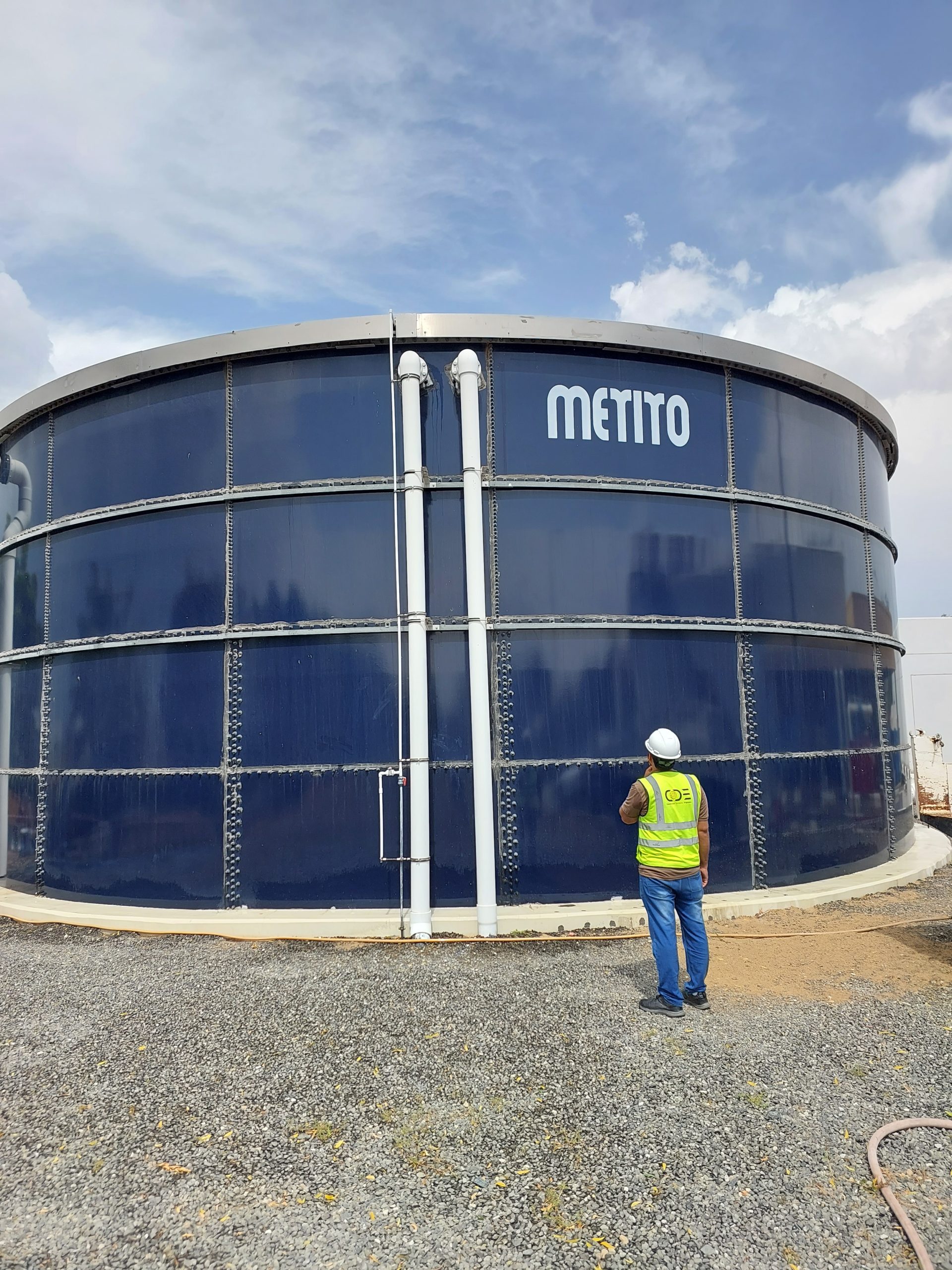
CDE Engineering Services was engaged by Sharjah Airport Authority to carry out a detailed structural assessment of the foundation system supporting the Treated Sewage Effluent (TSE) tank as part of the Sharjah International Airport expansion program.
The objective of the project was to investigate cracking observed in the foundation ring beam, assess its structural integrity, and determine the impact on durability and load-carrying capacity.
Client
Sharjah Airport Authority
Location
Sharjah, UAE
Client Challenge
Cracks were observed along the outer perimeter of the foundation ring beam supporting the steel tank structure.
Water leakage occurred when the tank was at full capacity, indicating potential issues with structural performance and waterproofing systems. Previous repair attempts using resin injection had not fully resolved the issue.
The client required a detailed investigation to identify the root cause of cracking and leakage, and to assess the long-term performance of the foundation system.
Scope of Work
Our Approach
CDE conducted a comprehensive investigation combining field inspection, testing, and engineering evaluation.
Visual inspection and testing methods were used to identify crack patterns, assess material properties, and evaluate the extent of deterioration. Laboratory analysis was performed to determine compressive strength and chloride contamination levels.
The structural behaviour of the ring beam and its interaction with the tank system was assessed to understand the mechanism causing cracking and leakage.
Key Findings
Cracks were identified in the ring beam, particularly in the southeast and southwest regions, with leakage occurring when the tank was at full capacity.
The primary cause of cracking was found to be tension forces induced by water pressure in the tank, which were transferred to the grout through anchor connections. The grout was unable to withstand these tensile forces, leading to cracking in both grout and adjacent concrete.
Chloride contamination was detected in certain areas, indicating a risk of corrosion. Seal strips installed to prevent leakage were found to be ineffective under full load conditions.
The base slab was generally in good condition, while localized deterioration was observed in associated components such as pipe flanges.
Solutions & Recommendations
CDE recommended replacement of the existing grout with suitable materials capable of resisting tensile forces.
Proper installation of seal strips was advised to prevent leakage under full tank capacity.
Measures to address chloride contamination and mitigate corrosion risks were also recommended.
These interventions were designed to restore structural integrity, eliminate leakage, and enhance long-term durability of the foundation system.
Outcome
The investigation provided a clear understanding of the root cause of cracking and leakage in the foundation system.
By identifying the structural mechanism behind the issue and proposing targeted solutions, CDE enabled the client to implement effective repairs and ensure safe and durable operation of the TSE tank.